
Explore the ways ASU Core Facilities are enabling cutting-edge research, novel discoveries, advanced technology and more.
Enabling research and discovery
ASU Core Facilities unite a vast array of equipment and expertise under one easy-to-use model to help academic researchers and companies of all sizes advance research and development. Our six distinct cores can accommodate a range of projects spanning many different disciplines and focal areas.


$135M
in research expenditures supported in 2025
48,000+
square feet of clean room space
43,000+
CPU cores and over 650 GPU accelerators across two supercomputers
1,400+
unique training events and workshops
$35M
invested in capital assets since 2020
554
ASU-led sponsored projects supported in 2025
160+
external clients served in 2025

Learn more about the research we enable
Supporting a sustainable future
Amidst increasing changes to the global climate, developing sustainable technology has emerged as a defining priority. Researchers and engineers play a pivotal role in advancing novel technology aimed at mitigating environmental degradation and creating a more sustainable world. ASU Core Research Facilities provide essential support to this scientific progress in service of a more sustainable tomorrow.
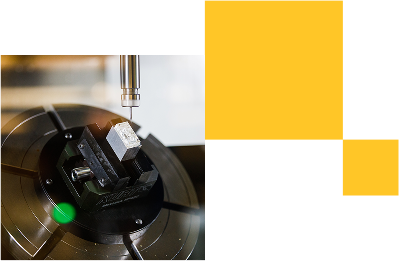
Reducing carbon emissions is a top priority to alleviate the impacts of climate change. But even the most optimistic estimates for curbing emissions will still leave excess carbon dioxide in the atmosphere — requiring additional solutions to create a more sustainable world. One solution, direct air capture, was pioneered at ASU and supported by the Instrument Design and Fabrication facility. In 2019, Instrument Design and Fabrication created components for Professor Klaus Lackner’s prototype device that passively removes excess CO2 from the air and stores it for conversion into other products, such as synthetic fuels. The prototype device was later displayed at the Science Museum in London as part of their Our Future Planet exhibition. The technology is now being commercialized into an artificial carbon collecting “tree” technology.
Impermeable surfaces in urban environments, such as roofs, roads, parking lots and sidewalks, play an important role in shaping urban microclimates. These surfaces affect energy consumption and contribute to the urban heat island effect, which increases heat-related injuries and deaths. One solution that has emerged is “cool” roofs and pavements, which provide relief from heat by reflecting more solar energy. Researchers in the School of Sustainable Engineering and the Built Environment, one of the Ira A. Fulton Schools of Engineering, are investigating the benefits and tradeoffs of cool roofs and pavements. Using Fourier Transform Infrared Spectroscopy and scanning electron microscopy at the Eyring Materials Center, the researchers are measuring coated pavement samples to evaluate the changes in their chemistry and reflectivity over time to determine the efficiency of cool surfaces as they age.

Developing advanced technology
Novel technologies are key to addressing complex global challenges. ASU’s Core Research Facilities provide vital resources and expertise to academic and industry clients to unlock new possibilities.
Supported by $50 million dollars or federal, state and corporate investment, the Advanced Electronics and Packaging Core Facility (AEP Core) Southwest Advanced Prototyping Hub (SWAP Hub) is setting up a state-of-the-art fanout wafer level packaging (FOWLP) research pilot line to encourage onshoring of electronics packaging by developing new packaging technology and bridging the gap between research and production. Over 30 new pieces of equipment have been installed to bring this facility to life with operations ramping in process currently.

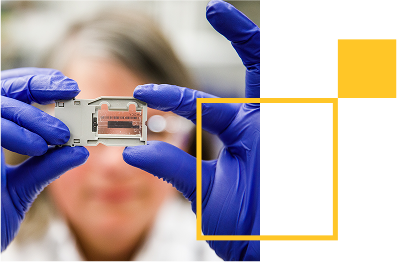
In 2023, Mehdi Nikkhah, an associate professor in the School of Biological Health Systems Engineering, was inducted as a Senior Member of the National Academy of Inventors for his development of tissue on-a-chip technology. This microsystem — supported broadly by the Biosciences core — was engineered to simulate the structure and function of human tissue and organs to better understand the biological mechanisms of complicated diseases such as cancer and cardiovascular abnormalities.

Bolstering national security
Though they are essential components of computers, cell phones, transportation infrastructure, medical technologies and even fighter aircraft, just 12% of microchips are produced in the U.S. Our dependence on them and their overseas production is a key strategic concern, and one that our Core Facilities are working to address.
There are myriad national efforts to secure U.S. leadership in cross-functional, next-generation microelectronics research, development and manufacturing. The ASU Core Research Facilities serve as an essential component in ASU’s contribution to this goal. Central to this effort are the Advanced Electronics and Packaging facility, the NanoFab Facility, the Solar Fab Facility, the Ultrafast Laser Facility, and the Eyring Materials Center.

When researchers need new tools, they can’t just go to the hardware store. Their work demands unique and sensitive instruments requiring custom fabrication at highly certified and specially outfitted commercial aerospace machine shops. But contracting with such companies can be a time-consuming and costly process. Fortunately for clients of ASU Core Research Facilities, the Instrument Design and Fabrication facility holds AS9100D and ISO 9001:2015 certifications, distinguishing it as one of only a few U.S. university facilities to do so. Such certifications allow Instrument Design and Fabrication to take on one-off, custom jobs in-house, enabling them to measure and verify that fabricated components meet the rigorous standards of the Federal Aviation Administration as well as those of the aerospace, defense and space industries.

Empowering the workforce of today — and tomorrow
Core Research Facilities’ vast array of equipment and expertise not only serves academia and industry clients with fundamental research and development, but also advances the demands of the workforce, providing hands-on experience for students and training for industry personnel.
ASU also leads the Southwest Advanced Prototyping Hub, funded with $40 million from the 2022 CHIPS and Science Act. The SWAP Hub brings together more than 200 leading corporate, startup, academic and national lab partners from the semiconductor and defense sectors to jump-start microelectronics projects. SWAP Hub draws on the decades-long experience of ASU Core Research Facilities such as the Advanced Electronics and Packaging facility.

ASU NanoFab is a key partner in the Microelectronics and Nanomanufacturing Certificate Program, which is specifically designed to help veterans gain entry to the growing microelectronics and semiconductor workforce. Funded by the National Science Foundation and facilitated by Penn State, the 12-week program equips veterans with the principles and practices they need to succeed in the semiconductor industry, including on-site training in a cleanroom environment. Alongside Rio Salado Community College, NanoFab represents one of seven regional partners in the program providing this valuable training and experience through the MNCP.

Fueling exploration of our universe
Behind the scenes of nearly every high-impact ASU space mission is at least one Core Research Facility. Researchers come to our facilities to design, fabricate and support instruments and spacecraft to explore Earth, our solar system and the far reaches of the universe.
The Instrument Design and Fabrication facility has supported more than 10 NASA missions, including its pivotal role in equipping the OSIRIS-REx spacecraft with the first space instrument built entirely on the ASU campus. The facility conceptualized and crafted the OSIRIS-REx Thermal Emission Spectrometer (OTES), a mission-critical instrument that was used to map asteroid Bennu’s mineralogy and surface temperature, data that helped mission scientists choose a site to collect a surface sample to return to Earth. The facility also contributed to the Lunar Polar Hydrogen Mapper (LunaH-Map), a shoebox-sized spacecraft that entered orbit around the moon and demonstrated that its neutron spectrometer can detect water and ice at the lunar surface.
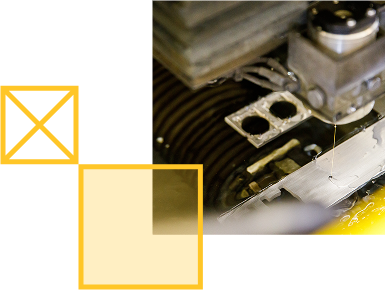
The Advanced Electronics and Packaging facility provides comprehensive electronics capabilities bridging the high-risk, resource-intensive gap between innovation and product development in an information-secure environment. ASU experimental astrophysicist Christopher Groppi received a NASA grant to develop very thin, lightweight planar filters and focusing optics to improve the performance and availability of large-aperture, far-infrared filters for space observatories and ground-based experiments. AEP is fabricating specialized long wavelength lenses and filters for the project. Meanwhile, AEP is fabricating and developing a LiDAR detector for space applications for a small company.

Advancing health solutions
Equipped with state-of-the-art facilities, advanced equipment and capabilities, and staffed with experienced personnel, ASU Core Research Facilities offer a variety of services to advance research dedicated to human health.
The Desert Southwest Genomics Center has contributed to the pioneering gut microbiome and autism research of Rosa Krajmalnik-Brown, director of the Biodesign Center for Health Through Microbiomes. She has led numerous studies on gut microbiota in Parkinson’s disease, obesity and autism as well as the use of microbial systems for bioremediation, supported by Genomics Center capabilities and equipment. This work has been funded by the Flinn Foundation, U.S. Department of Defense, Department of Energy and National Institutes for Health. External researchers, such as Nafisa Jadavji, have also tapped into the Genomics Center’s expertise and services. A neuroscientist at Midwestern University, Jadavji studies how the brain responds to various biological processes over a lifetime and how maternal nutrition contributes to offspring neurodevelopment, neurological diseases and aging. She’s leveraged the Genomics Center to analyze spatial gene expression data in dementia to examine what is happening at the single cell level.
Protecting patients’ personal health information is paramount in health research. ASU Research Computing supports and advances such research with the KE Secure Cloud, an advanced computing environment specifically designed for restricted research. The KE Secure Cloud enables health data access and collaboration among researchers in the domains of infectious disease, clinical research, social determinants of health and others. ASU is driving the future of health care through the Health Observatory at ASU, a real-time early warning system that will help leaders identify trends and make health-related decisions based on the latest available information and data in Arizona. Research Computing is developing a platform for the Health Observatory that enables data integration across multiple domains, including social and environmental factors, and facilitates collaboration with improved secure data-sharing capabilities. This will build a platform for computational support for genomics research of various viral, bacterial and fungal pathogens for the Arizona Department of Health Services and state of Arizona.


Explore our services
Student spotlight
Shedding new light on Earth’s earliest oceans
Pilar Vergeli, a graduate associate in School of Earth and Space Exploration at ASU, is investigating a fundamental question about our planet’s early history: how did iron behave in the oceans more than 2.5 billion years ago?
Her research focuses on iron photochemistry during the Archean Eon, a time that spanned from roughly 4 to 2.5 billion years ago. This eon — second only to the Hadean and preceding the Proterozoic — marks the era when life first took hold on Earth.
Working in the ASU METAL Core Facility, Vergeli is conducting photo-oxidation experiments in laboratory-simulated Archean seawater. Her aim is to explore how ultraviolet light, broken down by wavelength, affects the oxidation of Fe(II), a reduced form of iron believed to have been abundant in ancient oceans.
To carry out these experiments, she uses METAL’s photochemical setup, anoxic hood, UV-Vis spectrophotometer and a Thermo Scientific Quadrupole ICP-MS. These tools allow her to track how different wavelengths of UV light drive chemical changes in iron under early Earth conditions.
By revealing how iron responded to light before oxygen filled the atmosphere, Vergeli’s work refines our understanding of surface processes on the young Earth—and helps reconstruct the chemical landscape in which the first life evolved.


Unearthing the past, one hippo tooth at a time
Linet Sankau, a graduate research associate at Arizona State University’s Institute of Human Origins, is piecing together an ancient ecological puzzle — one that could help explain how early human relatives spread across East Africa.
Sankau studies paleoecology, the science of reconstructing prehistoric environments. She is analyzing fossilized hippo teeth collected from Hadar, a site in Ethiopia dated to about 3.5 million years ago. Hadar is best known as the discovery site of Lucy, the famed Australopithecus afarensis and A. afarensis fossil.
Around the time Lucy lived, the fossil record suggests East Africa was home to multiple hominin species. While A. afarensis has been found in Ethiopia, Kenya and Tanzania, another early human relative — Kenyanthropus platyops — has only turned up at Lomekwi, a site in northwestern Kenya. Sankau hopes her work can help explain why.
With training from ASU METAL Core’s Natasha Zolotova, she used METAL’s Sartorius microbalance and GasBench to collect enamel samples from along the growth axis of fossilized hippo teeth. She then used the Thermo Scientific MAT 253 IRMS to examine the isotopic signatures in the teeth. These serial samples preserve chemical clues about seasonal changes in climate, offering a detailed picture of the ancient environments at Hadar and Lomekwi. By comparing the two, Sankau aims to determine whether environmental differences — or even physical barriers — may have limited the range of certain hominin species.
Seasonal variation is thought to be a key driver of evolutionary pressure. Sankau’s research, which will incorporate additional environmental proxies over time, could shed new light on how ecological factors shaped the movement and survival of our early ancestors.

How can we help?
Do you have a problem with no clear solution? We’re on hand to consult on your individual challenges. Get in touch and we’ll figure it out together.